Adjunct Treatments
Our therapists specialize in the following treatment programs. Over the years we have seen amazing improvements in a child’s development through these treatments. These treatment protocols are just part of the process our therapists use in treating the whole child. Many years of clinical experience and continuing education also drive our therapists in providing the optimal therapeutic experience.
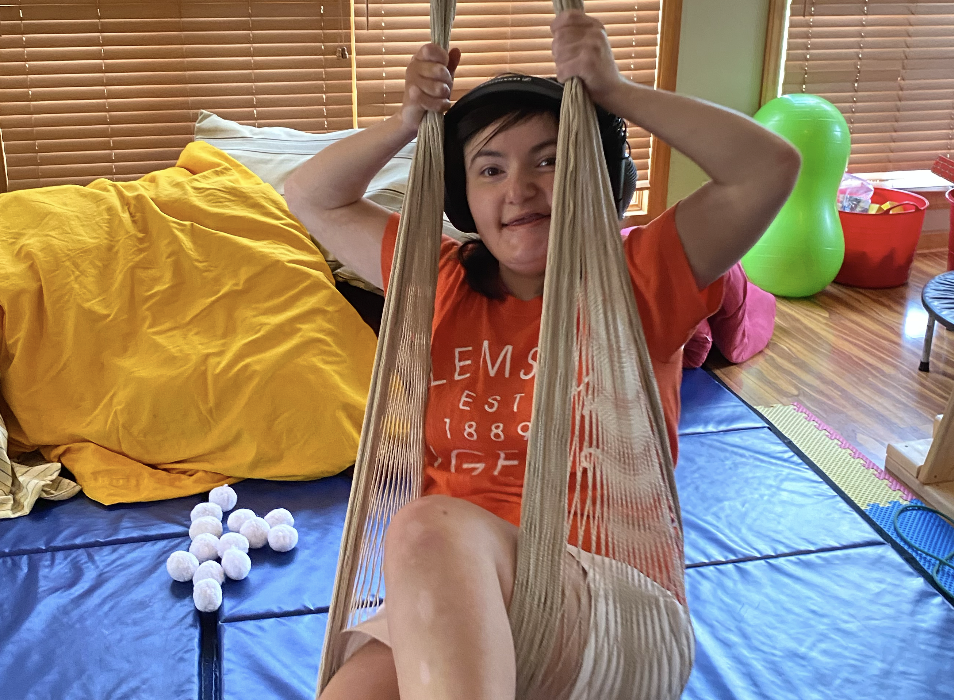
Sensory Integration
Sensory Integration is a term that describes the brain’s ability to take in information from the senses, organize it, and respond to it during experiences of daily life. The theory of of sensory integration was developed by Dr. A Jean Ayres. Occupational therapists trained in sensory integration can identify and treat sensory integration deficits and other disorders often seen including Sensory Processing Disorder (SPD), Sensory Modulation Disorder (SMD), and the underlying deficits encompassing these diagnoses.
Therapeutic Listening
Therapeutic Listening is rooted in sensory integration theory and uses specially recorded and enhanced music via headphones to create positive changes in the nervous system of those with sensory processing disorder. When used in conjunction with other sensory-based treatments it can accelerate the development of attention, praxis, self-regulation, postural control, bilateral coordination, visual-motor integration, and social and communication skills. The treatment can also reduce sensitivities to sounds and improves auditory discrimination or filtering of background sounds.
Handwriting without Tears
HWT is a handwriting curriculum that utilizes developmentally appropriate, multi-sensory strategies for early writing. It was developed through years of research to discover how children learn best and includes materials that address all styles of learning. Children are taught letters based on the starting point for repetition, as opposed to learning in alphabetical order; while specific stories or phrases paired with letter formation improves memory.
Astronaut Training
A program designed to organize the vestibular, visual, and auditory systems which are three major components of movement. It activates the three semicircular channels of the vestibular system to improve regulation, spatial awareness and general movement skills while training the eyes to use saccadic movements and smooth pursuits both vertically and horizontally.
The Alert Program
An innovative program that supports children, teachers, parents, and therapists to choose appropriate strategies to change or maintain states of alertness. Students learn what they can do before homework, tests, sports, and other activities to attain an optimal state of alertness or attention. Parents and teachers can learn strategies to use to help their children obtain optimal arousal levels.
Interactive Metronome
Interactive Metronome is a computer-based program that is used to improve attention, concentration, motor planning, and sequencing. It combines rhythmic, auditory, and visual input to which the child must use a variety of repetitive body movements to match the tempo. This, in turn, strengthens motor function, and many fundamental cognitive capacities such as planning, organization, and language.
 OT 4 Carolina Kids